The history of the Wari
In the world we live in today, where people are constantly rushing from one task to the next, there’s a tradition that slows everything down, not because it’s slow, but because it teaches us the value of walking together. That tradition is Wari, or Vari Parampara, a centuries-old spiritual journey that brings together millions of devotees every year in Maharashtra.
What is Wari?
Wari is a pilgrimage where people, called Warkaris, walk for hundreds of kilometres to reach the holy town of Pandharpur, the home of Lord Vitthal (Vithoba), a form of Lord Krishna. They walk with palkhis (palanquins) carrying the footprints or symbolic belongings of saints like Sant Dnyaneshwar and Sant Tukaram.
A Tradition of Over 700 Years
This incredible tradition has been followed for over 700 years. It started with the teachings of great saints like Sant Dnyaneshwar, Sant Tukaram, Sant Namdev, and many others who believed that God lives among the people, not only in temples.
For them, walking together to Pandharpur was a way of expressing love and surrender to Vitthal not just with prayers, but with action, sweat, and shared human spirit.
Who Are the Warkaris?
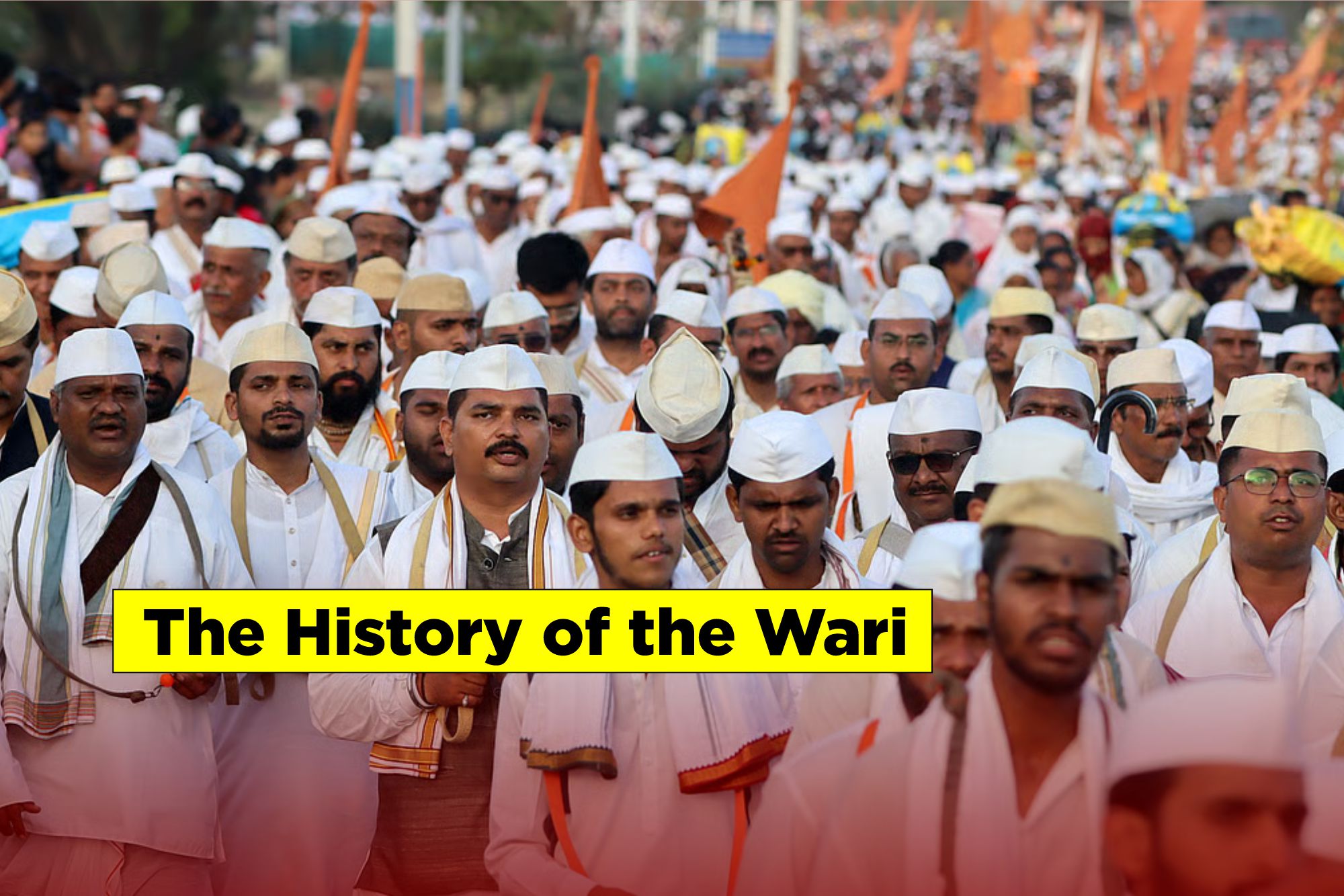
Warkaris are not defined by age, caste, class, or education. They are farmers, students, workers, housewives, everyday people with extraordinary faith. Wearing simple white clothes, tulsi malas, and a small bag, they walk joyfully, singing abhangas (devotional songs), playing tal, mridang, and ektara.
They help each other, feed strangers, and live simply along the route. There’s no show, no luxury, just pure devotion and community spirit.
Lessons from the Wari
In today’s digital world, where people often feel disconnected despite being online, the Wari teaches us to reconnect with ourselves and each other. Here’s what Wari gives us:
Patience – Walking long distances requires strength and control.
Equality – Everyone walks together. No one is above or below.
Discipline – Daily prayers, songs, and service bring focus to the mind.
Unity – People from different villages, backgrounds, and beliefs move like one big family.
Gratitude – Even with minimum resources, Warkaris are filled with joy and thankfulness.
Why Wari Still Matters Today
It shows us that faith doesn’t need big temples or expensive rituals. It just needs a willing heart and a walking step.
In a time when the world needs more love, kindness, and togetherness, the Vari Parampara is not just relevant, it’s necessary.
Final Thought
You may not be a Warkari, and you may never walk in the Wari. But even learning about it reminds us of what really matters: faith, simplicity, and walking together on life’s path.