Welcome to Yugantar Life Join as a Creator →

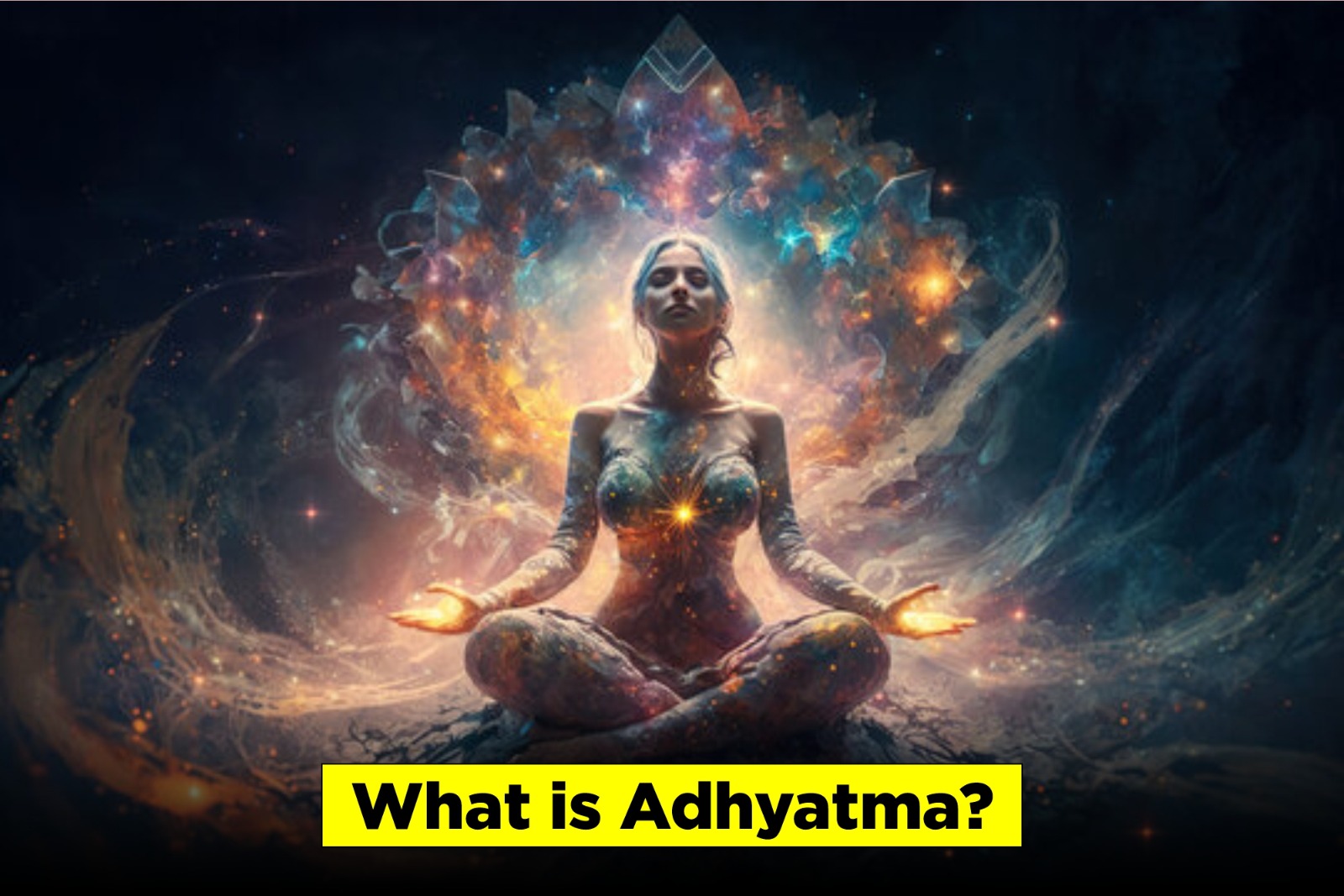
What is Adhyatma? A Hindu Perspective on the Inner Self

What is Adhyatma? A Hindu Perspective on the Inner Self

What is Adhyatma? A Hindu Perspective on the Inner Self

What is Adhyatma? A Hindu Perspective on the Inner Self : In the Hindu philosophy, Adhyatma is a path, a purpose, and a powerful realisation. Deeply Rooted in the Vedas, explored in the Upanishads, and beautifully expressed in the Bhagavad Gita, Adhyatma is the journey inward — a path every Hindu is should walk.

Meaning of Adhyatma in Hinduism

The Sanskrit word Adhyātma (अध्यात्म) is made of:

Adhi – meaning pertaining to or concerning

Ātman – meaning soul, Self, or the innermost essence

So, Adhyatma means — the practice of knowing, experiencing, and realizing the Ātman, which is nothing but a reflection of Brahman (the Supreme Reality).

The Foundation: "You are not the body, you are the Atman."

This is the timeless message in Hindu philosophy. From Upanishads to Bhagavad Gita, the rishis says:

"Tat Tvam Asi" – you are that
"Aham Brahmasmi" – I am Brahma(creator)

The mahavakyas point to the truth that our real identity is not the body or mind, but the internal Atman — pure, blissful, untouched by birth and death.

Adhyatma in the Bhagavad Gita

Lord Krishna, explains Adhyatma in Chapter 8 of the Gita:

"अधिभूतं क्षरो भावः पुरुषश्चाधिदैवतम्।
अधियज्ञोऽहमेवात्र देहे देहभृतां वर" (BG 8.4)

He explains that Adhyatma is the knowledge of the self (sva-bhāva) — understanding the nature of one's soul, which is beyond the body and changing world.

Bhagwan Krishna urges Arjuna to go beyond the material and understand the eternal essence within — the real Adhyatma.

Why is Adhyatma Essential in Hindu Dharma?

Unlike many external rituals and customs, Adhyatma is about inner transformation. In Hinduism, it is the highest dharma — the spiritual responsibility of a human life.

It helps us:

Break free the cycle of birth and death (Sansara)
Overcome ego, attachment, and illusion (Maya)
Realize moksha, the ultimate liberation

Adhyatma begins when you do, following steps with sincerity.

1. Daily Meditation (Dhyana)

Sit in silence. Chant Om. Watch your breath.
Patanjali Yoga Sutras says, “योगश्चित्तवृत्तिनिरोधः” — Adhyatma requires calm mind.

2. Satsang (Company of the Wise)

Spend time in spiritual discussions or listen to discourses of enlightened saints.

3. Seva (Selfless Service)

Offer service without expecting results. It purifies the heart.

What Happens When You Walk the Path of Adhyatma?

Peace becomes natural, even in chaos
Your actions become selfless and pure
You stop reacting — and start responding

You realize: “I am not this body— I am the eternal Atman.”

This is Moksha — the goal of every soul.

Final Thought: Adhyatma is the Soul of Hindu Dharma
In Hinduism, Adhyatma is not separate from life — it is life.
It reminds us that behind every puja, mantra, yatra, or festival lies one deeper purpose — to connect with the divine within.

So, whether you're reading the Gita, meditating in silence, or simply living with awareness — you're already walking the path of Adhyatma.

In the temple of the heart,
With the lamp of knowledge,
Let us discover the divine light — our true Self.
Adhyatma in Action: Living Spirituality in Daily Life

When people hear the word Adhyatma, they often think of a monk in the Himalayas, doing deep meditation, or renunciation from the world. But the truth is, Adhyatma is not about escaping life — it is about engaging with life more deeply, more consciously.

In today’s fast-paced world life is filled with deadlines, relationships, and responsibilities, but spirituality doesn’t need to be kept in a corner. It can become the very heart of how we live, work, speak, and connect.

Adhyatma is Not a Separate Life — It’s a Deeper Way to Live This One
In Hindu philosophy, Adhyatma says "relating to the self" — not just the ego or personality, but the true self, the Atman, which is eternal, peaceful, and divine.

Living spiritually doesn’t require isolation — it requires awareness.
And awareness can be practiced anywhere — while talking, working, eating, or even arguing.

Adhyatma at Work: Karma Yoga in Action
You don’t need to quit your job to walk a spiritual path. You need to change how you view your job.

कर्मण्येवाधिकारस्ते मा फलेषु कदाचन 
मा कर्मफलहेतुर्भूर्मा ते सङ्गोऽस्त्वकर्मणि
“Do your work, but don’t be attached to the result.” — Bhagavad Gita 2.47

This is Karma Yoga, one of the most powerful ways to live Adhyatma.

Try this:

Work sincerely, not to please the boss, but as an offering to the Divine.
Don’t carry stress home — remember you are the doer of actions, not the owner of outcomes.
Be honest, kind, and mindful — these are not just values, they are spiritual practices.

Adhyatma in Relationships: See the Divine in Others

In daily relationships, we often react out of ego, expectation, or hurt. But Adhyatma teaches us to look deeper.

What if you saw the same Atman in your family, friends, and even difficult people?

अहमात्मा गुडाकेश सर्वभूताशयस्थित:
अहमादिश्च मध्यं च भूतानामन्त एव च
“Ishvara exists in all beings.” — Bhagavad Gita 10.20

Try this:

Listen more than you speak.
Respond, don’t react.
Forgive — not because they deserve it, but because you deserve peace.

Adhyatma in Routine: Making the Mundane Sacred

Brushing your teeth, making tea, commuting — we do these things on auto-pilot. But every act can be a meditation if done with full presence.

Try this:

Before meals, close your eyes and say “Thank you.”
Do chores with joy, not irritation — they train patience and humility.
Use moments of silence (like waiting in line) to take a breath and go within.
This is the beauty of Hindu spiritual thought — nothing is ordinary when done with awareness.

Adhyatma is Not a To-Do List — It’s a Way of Being
You don’t need to always be chanting or meditation to be spiritual. You can be:

Driving with calmness
Eating with gratitude
Arguing without ego
Working with sincerity
Loving without attachment
This is Adhyatma in Action.

Final Thought: Make Every Day Your Ashram

You don’t need to be in an ashram to live spiritually.
Your office, kitchen, local train — all can be places of inner growth, if you remember who you are.

The real temple is within.
The real guru is your conscience.
The real prayer is presence.

So walk the path. Not away from the world — but right through it, with your head high, heart soft, and soul awake.
 

More Trending Topic

1 WEEK AGO By prajwal warkhade

Daily Puja Vidhi: A Simple Guide

A daily puja need not be elaborate to be meaningful, at its heart, it is a quiet, consistent act of gratitude and connection. Most traditions begin with cleaning the puja space and lighting a lamp (diya) and incense, followed by a short invocation asking for the presence and blessings of the chosen deity. Offerings such as flowers, water, a tilak of kumkum, and naivedya (food offered in devotion) are presented with folded hands, often accompanied by a favourite mantra or aarti. The order, purification, invocation, offering, and closing prayer, matters less than the sincerity behind it; even five focused minutes each morning can anchor the rest of the day. Many households keep a fixed time, typically at sunrise, to build the ritual into a steady habit rather than an occasional obligation. Ultimately, daily puja is less about ceremony and more about cultivating a regular pause for reflection, humility and gratitude amid life's routine.

1 WEEK AGO By prajwal warkhade

पतंजलींचे योगसूत्र: एक ओळख

दोन हजार वर्षांहूनही आधी महर्षी पतंजलींनी संकलित केलेले योगसूत्र हे शास्त्रीय योगदर्शनाचा एक मूलभूत ग्रंथ आहे, जो चार अध्यायांत मांडलेल्या १९६ संक्षिप्त सूत्रांच्या स्वरूपात सादर केला आहे. हा ग्रंथ केवळ शारीरिक आसनांची पुस्तिका नाही, तर योगाची व्याख्या 'चित्तवृत्तिनिरोध' — म्हणजेच मनाच्या चंचलतेला शांत करणे — अशी करतो, आणि त्या स्थैर्याकडे नेणारा पद्धतशीर मार्ग म्हणून अष्टांग योग, म्हणजेच आठ अंगांचा मार्ग मांडतो. ही आठ अंगे — यम (नैतिक संयम), नियम (वैयक्तिक आचरण), आसन (मुद्रा), प्राणायाम (श्वास नियंत्रण), प्रत्याहार (इंद्रियनिग्रह), धारणा (एकाग्रता), ध्यान (मनन) आणि समाधी (तल्लीनता) — बाह्य शिस्तीपासून आंतरिक जाणिवेकडे क्रमाक्रमाने घेऊन जातात. योगसूत्रे मानवी जीवनातील सार्वत्रिक संघर्षांना — विचलन, आसक्ती, भीती आणि अस्वस्थता — संबोधित करतात, आणि अमूर्त सिद्धांताऐवजी व्यावहारिक मार्गदर्शन देतात. आजही, जगभरातील योगसाधक पतंजलींच्या या चौकटीकडे केवळ शारीरिक सरावासाठीच नव्हे, तर मन अधिक चांगल्या प्रकारे समजून घेण्यासाठी आणि टिकाऊ आंतरिक स्थैर्य जोपासण्यासाठीही वळतात.

1 WEEK AGO By prajwal warkhade

पतंजलि के योग सूत्र: एक परिचय

दो हजार वर्ष से भी पहले महर्षि पतंजलि द्वारा संकलित योग सूत्र, शास्त्रीय योग दर्शन का एक मूल ग्रंथ है, जिसे चार अध्यायों में संगठित 196 संक्षिप्त सूत्रों के रूप में प्रस्तुत किया गया है। यह ग्रंथ केवल शारीरिक आसनों की पुस्तिका नहीं है, बल्कि योग को 'चित्त वृत्ति निरोध' — अर्थात मन की चंचलताओं को शांत करना — के रूप में परिभाषित करता है, और उस स्थिरता की ओर एक व्यवस्थित मार्ग के रूप में अष्टांग योग, यानी आठ अंगों वाले मार्ग को प्रस्तुत करता है। ये आठ अंग — यम (नैतिक संयम), नियम (व्यक्तिगत आचरण), आसन (मुद्रा), प्राणायाम (श्वास नियंत्रण), प्रत्याहार (इंद्रियों का निग्रह), धारणा (एकाग्रता), ध्यान (मनन) और समाधि (लीनता) — बाह्य अनुशासन से आंतरिक जागरूकता की ओर क्रमिक रूप से बढ़ते हैं। योग सूत्र मानव जीवन के सार्वभौमिक संघर्षों — विचलन, आसक्ति, भय और बेचैनी — को संबोधित करते हैं, और अमूर्त सिद्धांत के बजाय व्यावहारिक मार्गदर्शन प्रदान करते हैं। आज भी, विश्वभर के योग साधक पतंजलि के इस ढांचे की ओर न केवल शारीरिक अभ्यास को गहरा करने के लिए, बल्कि मन को बेहतर समझने और स्थायी आंतरिक स्थिरता विकसित करने के लिए भी देखते हैं।

1 WEEK AGO By prajwal warkhade

Yoga Sutras of Patanjali: An Introduction

Compiled by the sage Patanjali over two thousand years ago, the Yoga Sutras are a foundational text of classical yoga philosophy, presented as 196 concise aphorisms organised into four chapters. Far from being only a manual of physical postures, the text defines yoga as 'chitta vritti nirodha', the stilling of the fluctuations of the mind, and lays out the Ashtanga, or eight-limbed path, as a systematic route towards that stillness. These eight limbs, yama (ethical restraints), niyama (personal observances), asana (posture), pranayama (breath control), pratyahara (withdrawal of the senses), dharana (concentration), dhyana (meditation) and samadhi (absorption), move progressively from outward discipline to inward awareness. The Sutras address universal human struggles: distraction, attachment, fear and restlessness, offering practical guidance rather than abstract theory. Even today, practitioners of yoga around the world turn to Patanjali's framework not just to deepen a physical practice, but to better understand the mind and cultivate lasting inner steadiness.

1 WEEK AGO By prajwal warkhade

दुर्गा सप्तशती: माँ जगदंबा की महिमा

दुर्गा सप्तशती, जिसे देवी महात्म्य के नाम से भी जाना जाता है, सात सौ श्लोकों का एक पूजनीय ग्रंथ है जो दिव्य माँ की शक्ति को उनके अनेक रूपों में महिमामंडित करता है। मार्कंडेय पुराण के भाग के रूप में रचित यह ग्रंथ तीन मुख्य प्रसंगों का वर्णन करता है जिनमें देवी ब्रह्मांडीय संतुलन को पुनर्स्थापित करने के लिए प्रकट होती हैं — सबसे प्रसिद्ध रूप से महिषासुर नामक भैंसे के रूप वाले असुर के साथ उनका युद्ध, जिसके अत्याचार ने देवताओं को भी निराश कर दिया था। नवरात्रि के दौरान व्यापक रूप से पाठ किया जाने वाला यह ग्रंथ केवल बुराई पर विजय की कथा नहीं है; इसे शक्ति — ब्रह्मांड में व्याप्त और हर प्राणी में निवास करने वाली स्त्री सृजनात्मक तथा रक्षात्मक ऊर्जा — पर एक चिंतन माना जाता है। इसके तेरह अध्यायों में से प्रत्येक विशिष्ट आशीर्वादों से जुड़ा है, और भक्त प्रायः नवरात्रि की नौ रातों में इसका संपूर्ण पाठ भक्ति और आंतरिक शुद्धिकरण के कार्य के रूप में करते हैं। ग्रंथ में देवी की विजय अंततः यह स्मरण कराती है कि धर्मपूर्ण शक्ति, चाहे कितनी भी विलंबित क्यों न हो, अहंकार और अन्याय पर सदैव विजयी होती है।

1 WEEK AGO By prajwal warkhade

Durga Saptashati: The Glory of the Divine Mother

Durga Saptashati, also known as Devi Mahatmya, is a revered text of seven hundred verses that celebrates the power of the Divine Mother in her many forms. Composed as part of the Markandeya Purana, it narrates three principal episodes in which the Goddess emerges to restore cosmic balance, most famously her battle with the buffalo demon Mahishasura, whose tyranny had driven even the gods to despair. Recited widely during Navratri, the text is not simply a tale of victory over evil; it is regarded as a meditation on shakti, the feminine creative and protective energy that pervades the universe and resides within every being. Each of its thirteen chapters is associated with specific blessings, and devotees often undertake a complete recitation, or paath, over the nine nights of Navratri as an act of devotion and inner purification. The Goddess's triumph in the text is ultimately a reminder that righteous strength, however delayed, always prevails over arrogance and injustice.

1 WEEK AGO By prajwal warkhade

रामायण: दैनंदिन जीवनासाठी मुख्य शिकवणी

महर्षी वाल्मीकींनी रचलेली रामायण केवळ भगवान रामांच्या वनवासाची आणि रावणाशी झालेल्या युद्धाची कथा नाही — ती कर्तव्य, नातेसंबंध आणि धर्मपूर्ण जीवनासाठी एक समृद्ध मार्गदर्शक आहे. रामांची आपल्या वचनाप्रती असलेली अढळ बांधिलकी, त्याची वैयक्तिक किंमत कितीही मोठी असली तरी, सत्यनिष्ठेचे मूल्य दर्शवते; संकटांमध्ये सीतेची शांत शक्ती आणि प्रतिष्ठा हे धैर्याचे प्रतिबिंब आहे; आणि लक्ष्मणाची निःस्वार्थ निष्ठा, जी आपल्या भावासोबत वनवासात जाण्यातून दिसते, बंधुप्रेमाच्या शक्तीबद्दल बोलते. हनुमानजींची विनम्र पण निर्भय सेवा शिकवते की खरी शक्ती अहंकारात नव्हे तर भक्तीत आहे, तर शक्तिशाली रावणाचा अंतिम पाडाव हे स्मरण करून देतो की अहंकार आणि इतरांकडे दुर्लक्ष अखेर विनाशाकडे घेऊन जाते. केवळ धर्मग्रंथ म्हणून नव्हे तर मानवी चारित्र्याचा अभ्यास म्हणून वाचली जाणारी रामायण कौटुंबिक कर्तव्य, संयम, निष्ठा आणि योग्य ते करण्यासाठी आवश्यक असलेल्या शांत धैर्यावर व्यावहारिक शहाणपण देत राहते, मग ते कितीही कठीण का असेना.

1 WEEK AGO By prajwal warkhade

रामायण: दैनिक जीवन के लिए मुख्य शिक्षाएं

महर्षि वाल्मीकि द्वारा रचित रामायण केवल भगवान राम के वनवास और रावण के साथ उनके युद्ध की कथा नहीं है — यह कर्तव्य, संबंधों और धर्मपूर्ण जीवन के लिए एक समृद्ध मार्गदर्शिका है। राम की अपने वचन के प्रति अटूट प्रतिबद्धता, चाहे इसकी व्यक्तिगत कीमत कितनी भी बड़ी क्यों न हो, सत्यनिष्ठा के मूल्य को दर्शाती है; कठिनाइयों के बीच सीता की मौन शक्ति और गरिमा दृढ़ता को प्रतिबिंबित करती है; और लक्ष्मण की निःस्वार्थ निष्ठा, जो अपने भाई के साथ वनवास में जाने में झलकती है, भाइयों के बीच भक्ति की शक्ति को दर्शाती है। हनुमान जी की विनम्र किंतु निडर सेवा यह सिखाती है कि सच्ची शक्ति अहंकार में नहीं बल्कि भक्ति में निहित है, जबकि शक्तिशाली रावण का अंततः पतन यह स्मरण कराता है कि अहंकार और दूसरों की उपेक्षा अंततः विनाश की ओर ले जाती है। केवल धर्मग्रंथ के रूप में नहीं बल्कि मानव चरित्र के अध्ययन के रूप में पढ़ी जाने वाली रामायण पारिवारिक कर्तव्य, धैर्य, निष्ठा और सही कार्य करने के लिए आवश्यक मौन साहस पर व्यावहारिक ज्ञान प्रदान करती रहती है, चाहे वह कितना भी कठिन क्यों न हो।