Sargandha admin
·
2 MONTHS AGO
Yoga Sutras of Patanjali: An Introduction
Compiled by the sage Patanjali over two thousand years ago, the Yoga Sutras are a foundational text of classical yoga philosophy, presented as 196 concise aphorisms organised into four chapters. Far from being only a manual of physical postures, the text defines yoga as 'chitta vritti nirodha', the stilling of the fluctuations of the mind, and lays out the Ashtanga, or eight-limbed path, as a systematic route towards that stillness. These eight limbs, yama (ethical restraints), niyama (personal observances), asana (posture), pranayama (breath control), pratyahara (withdrawal of the senses), dharana (concentration), dhyana (meditation) and samadhi (absorption), move progressively from outward discipline to inward awareness. The Sutras address universal human struggles: distraction, attachment, fear and restlessness, offering practical guidance rather than abstract theory. Even today, practitioners of yoga around the world turn to Patanjali's framework not just to deepen a physical practice, but to better understand the mind and cultivate lasting inner steadiness.y
Yoga is one of the most valuable gifts of ancient Indian tradition to the world. It is not simply a physical exercise or a practice of performing different postures. Yoga is a holistic discipline that helps bring balance between the body, mind, and inner self.
Among the most important classical texts of Indian yoga philosophy are the Yoga Sutras of Patanjali, traditionally attributed to Maharishi Patanjali. This ancient text explains the principles of yoga and provides guidance on controlling the mind, developing concentration, practising meditation, and progressing towards spiritual freedom.
Even today, the teachings of Patanjali remain relevant because they encourage self-discipline, inner peace, awareness, and a balanced lifestyle.
Let's explore the meaning, philosophy, importance, and eight limbs of yoga described in the Yoga Sutras of Patanjali.
Who Was Maharishi Patanjali?
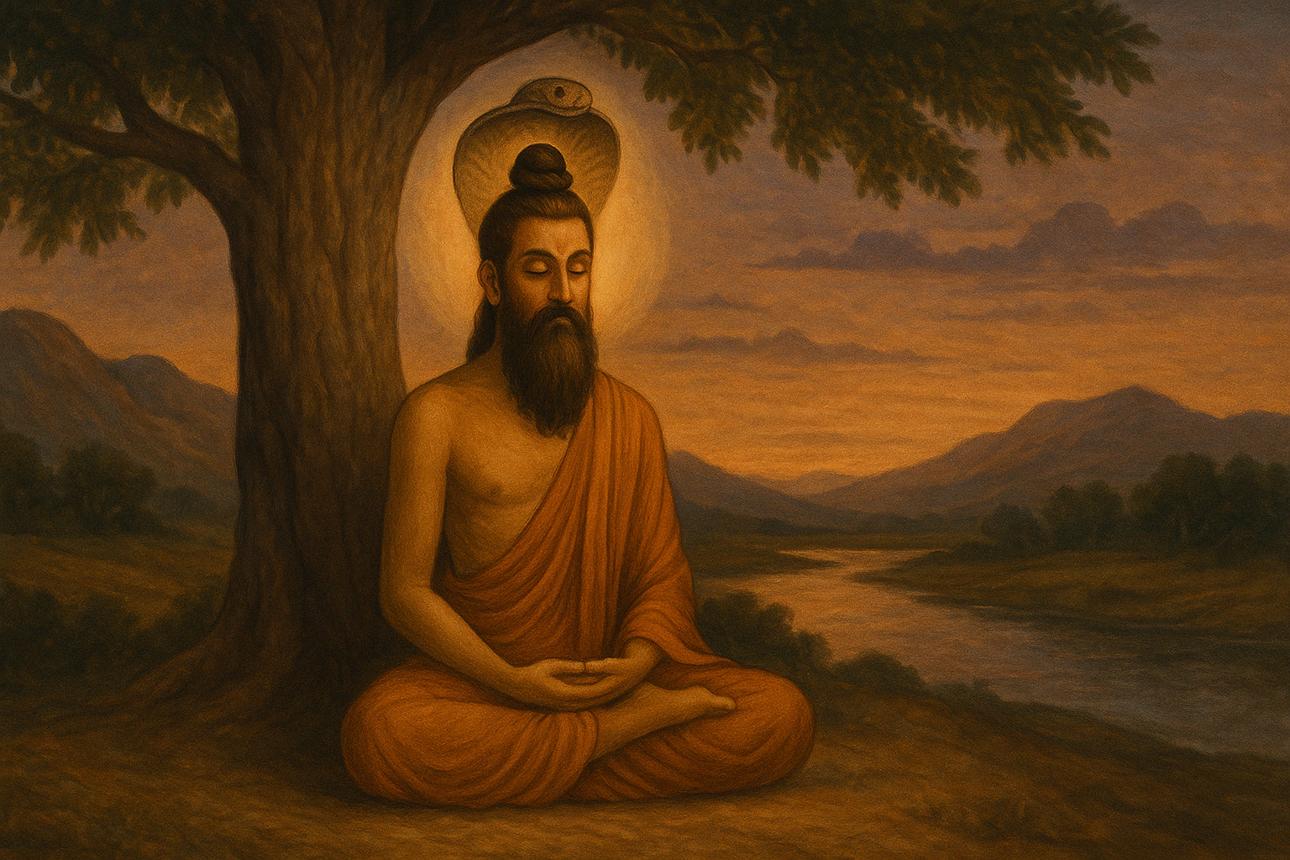
Maharishi Patanjali is one of the most respected figures in the Indian tradition of yoga philosophy. He is traditionally associated with the composition of the Yoga Sutras, one of the foundational texts of classical yoga.
His teachings present the principles of yoga in the form of short, meaningful Sanskrit statements known as sutras.
These teachings explain the nature of the human mind, mental fluctuations, concentration, meditation, discipline, and spiritual liberation.
The Yoga Sutras have influenced generations of yoga practitioners, spiritual seekers, and students of Indian philosophy.
What Are the Yoga Sutras of Patanjali?
The Yoga Sutras of Patanjali are a collection of concise Sanskrit teachings that explain the philosophy and practice of yoga.
The word "Sutra" means a thread or concise statement that expresses a deeper idea in a few words.
The text is traditionally divided into four chapters, known as Padas, and contains 195 or 196 sutras depending on the textual tradition and method of counting.
One of the most famous teachings from the Yoga Sutras is:
"Yogash Chitta Vritti Nirodhah"
This Sanskrit statement is commonly translated as:
"Yoga is the stilling of the fluctuations of the mind."
It explains that yoga is a process of understanding and calming the continuous thoughts, emotions, and mental activities that influence our daily lives.
According to Patanjali, when the mind becomes calm and focused, a person can experience greater clarity, awareness, and inner peace.
The Four Chapters of the Yoga Sutras
The Yoga Sutras are divided into four important chapters. Each chapter explains a different aspect of yoga philosophy and spiritual development.
1. Samadhi Pada – The Chapter on Concentration
Samadhi Pada introduces the meaning and purpose of yoga. It explains the nature of the mind, different mental activities, concentration, and the state of Samadhi.
This chapter teaches that controlling mental fluctuations is essential for achieving inner peace and deeper awareness.
2. Sadhana Pada – The Chapter on Practice
Sadhana Pada focuses on the practical aspects of yoga.
It introduces the concept of Ashtanga Yoga, or the Eight Limbs of Yoga, and explains the importance of discipline, ethical behaviour, physical posture, breath regulation, and meditation.
It encourages individuals to develop regular habits that support personal and spiritual growth.
3. Vibhuti Pada – The Chapter on Spiritual Accomplishments
Vibhuti Pada explains the advanced practices of concentration, meditation, and Samadhi.
It discusses special abilities or experiences traditionally associated with deep yogic practice. These are called Vibhutis.
The chapter also reminds practitioners that extraordinary experiences should not become distractions from the ultimate goal of yoga.
4. Kaivalya Pada – The Chapter on Liberation
Kaivalya Pada discusses the highest goal of yoga: spiritual liberation or Kaivalya.
It explores consciousness, the nature of the mind, and freedom from the limitations that bind human awareness.
This chapter represents the philosophical culmination of Patanjali's teachings.
The Eight Limbs of Yoga (Ashtanga Yoga)
One of the most important contributions of the Yoga Sutras is the explanation of Ashtanga Yoga, which means the Eight Limbs of Yoga.
These eight limbs provide a systematic path towards self-discipline, concentration, meditation, and spiritual awareness.
1. Yama – Ethical Principles
Yama refers to ethical guidelines that help individuals live peacefully and responsibly in society.
It consists of five principles:
Ahimsa: Practising non-violence and kindness towards all living beings.
Satya: Speaking and following the truth.
Asteya: Avoiding stealing or taking what does not belong to us.
Brahmacharya: Practising self-control and moderation.
Aparigraha: Avoiding unnecessary possessions and excessive attachment.
2. Niyama – Personal Discipline
Niyama refers to personal habits and disciplines that help improve one's inner life.
It includes five principles:
Shaucha: Maintaining cleanliness of the body and mind.
Santosha: Developing contentment and gratitude.
Tapas: Practising discipline and dedication.
Svadhyaya: Studying spiritual texts and understanding oneself.
Ishvara Pranidhana: Surrendering to and having devotion towards the Divine.
3. Asana – Physical Postures
Asana refers to physical postures practised to develop stability and comfort in the body.
Regular yoga practice can help improve flexibility, balance, posture, and physical awareness.
In Patanjali's philosophy, an asana should be steady and comfortable, preparing the body for meditation.
4. Pranayama – Regulation of Breath
Pranayama refers to the regulation of breathing.
It involves developing awareness of the breath and practising appropriate breathing techniques.
Pranayama is traditionally considered an important practice for preparing the mind for concentration and meditation. Beginners should learn breath-control techniques under qualified guidance.
5. Pratyahara – Withdrawal of the Senses
Pratyahara means withdrawing the senses from external distractions and directing attention inward.
It helps practitioners become less controlled by outside attractions and develop greater awareness of their inner experiences.
6. Dharana – Concentration
Dharana means focusing the mind on a particular object, thought, sound, or point.
It is the practice of developing one-pointed concentration and reducing mental distractions.
7. Dhyana – Meditation
Dhyana refers to a continuous and uninterrupted flow of concentration.
During meditation, the mind remains steadily focused without constantly shifting from one thought to another.
Regular meditation can encourage self-awareness, calmness, and mental clarity.
8. Samadhi – State of Deep Absorption
Samadhi is the final limb of Ashtanga Yoga.
It represents a profound state of meditative absorption in which the distinction between the observer and the object of meditation becomes progressively refined.
In Patanjali's philosophy, Samadhi is an essential part of the journey towards spiritual liberation.
Importance of the Yoga Sutras in Daily Life
The teachings of Patanjali are not limited to spiritual practitioners. Their principles can also guide people in everyday life.
Here are some important benefits of applying these teachings:
1. Mental Peace: Practising mindfulness and meditation can help develop a calmer and more balanced mind.
2. Better Concentration: Dharana teaches the importance of focusing on one task at a time.
3. Self-Discipline: Yama and Niyama encourage good habits, ethical behaviour, and personal responsibility.
4. Emotional Balance: Yoga philosophy encourages awareness of thoughts and emotions rather than reacting impulsively.
5. Positive Living: Principles such as truthfulness, non-violence, and contentment encourage healthier relationships and a more thoughtful lifestyle.
6. Spiritual Growth: Meditation and self-study help individuals understand themselves more deeply.
How to Begin Practising the Teachings of Patanjali
You do not need to become an expert in yoga to begin learning from the Yoga Sutras.
You can start with a few simple practices:
Spend a few minutes every day sitting quietly and observing your breath.
Practise kindness, honesty, and self-control in daily interactions.
Include suitable yoga postures in your daily routine.
Practise meditation regularly, even if you begin with five minutes.
Read one Yoga Sutra at a time and understand its meaning.
Develop a habit of self-reflection and gratitude.
Maintain consistency and patience in your practice.
The purpose is not to achieve perfection immediately but to gradually develop awareness, discipline, and inner balance.
Why Are the Yoga Sutras Relevant in Modern Life?
Modern lifestyles are often filled with work pressure, responsibilities, distractions, and constant activity.
People frequently find it difficult to maintain mental peace and focus.
The Yoga Sutras offer timeless principles that encourage individuals to slow down, understand their thoughts, develop self-control, and live with greater awareness.
Their teachings remind us that true peace does not depend entirely on external circumstances. It also comes from understanding and training our own minds.
This is why Patanjali's philosophy continues to inspire yoga practitioners around the world.
Conclusion
The Yoga Sutras of Patanjali are among the most valuable treasures of ancient Indian philosophy. They provide a systematic understanding of yoga as a path of self-discipline, mental clarity, meditation, and spiritual development.
Through the Eight Limbs of Yoga, Maharishi Patanjali explains how ethical living, physical stability, breath awareness, concentration, and meditation work together towards the higher goal of self-realisation.
Yoga is much more than physical exercise. It is a journey of understanding the mind, discovering inner strength, and creating harmony within oneself.
The timeless message of Patanjali reminds us that when the mind becomes calm and balanced, we move closer to a life of awareness, wisdom, and inner peace.